On April 21, 2026, OpenAI shipped ChatGPT Images 2.0, powered by a new model called gpt-image-2. The pitch is short: image generation now has a reasoning step. The model can "think" before it renders, verify its own output, and iterate on a single prompt the way you would iterate on a document.
That framing matters more than any of the individual demos. For two years, image models were judged on one axis — photorealism. gpt-image-2 is the first mainstream model that's judged on a second: whether the image is correct.
What actually changed
Under the hood, there are two modes:
- Instant — fast, DALL·E-style outputs for quick generations.
- Thinking — a deliberate path where the model reasons through layout, text, and structure before it commits pixels.
The thinking path is where the interesting behavior lives. It can:
- Render text that's actually spelled correctly. DALL·E 3 famously produced menus with "enchuita" and "churiros". Images 2.0 generates restaurant menus, slide decks, and UI mockups with pixel-perfect text — including Japanese, Korean, Hindi, and Bengali.
- Keep characters consistent across frames. Multi-panel comics, storyboards, and manga pages now hold a character's face, outfit, and proportions across images generated from a single prompt.
- Self-verify. The model checks its own output against the prompt and regenerates sections that miss. This is the part that feels genuinely new — image gen has never had a feedback loop like this.
- Use the web. If you ask for a product shot of a real item, it can search for reference material before drawing.
Output goes up to 2K resolution, across aspect ratios from 3:1 to 1:3. Complex thinking-mode outputs (multi-panel comics, dense UI) take several minutes — this isn't a speed play.
Why text rendering is the real story
Everyone will focus on the photorealism demos. The actual unlock is text.
For the last two years, "AI for design" mostly meant "AI for moodboards". You couldn't ship the output. The moment a logo, menu, ad, or UI mockup needed real words, the model broke and a human had to take over in Figma. Text rendering was the wall between image gen and production design work.
gpt-image-2 steps over that wall. A magazine spread, a product packaging mockup, a storyboard with dialogue bubbles, a SaaS landing page wireframe with real copy — these are now one-shot generations. That changes who the customer is. It's no longer just artists and hobbyists. It's marketing teams, indie founders, educators, and anyone who was previously blocked by "the AI can't spell".
Why "thinking" is a bigger deal than it sounds
Diffusion models generate by denoising. They don't plan. That's why they've always struggled with anything compositional — text, hands, counts, spatial relationships.
A reasoning step in front of generation is a different architecture problem. OpenAI hasn't confirmed whether gpt-image-2 is autoregressive, a hybrid, or a reasoning wrapper around a diffusion backbone. But the capability pattern — consistency, correctness, self-verification — lines up with what autoregressive token-based image models have shown in research.
Whatever the architecture, the product implication is clear: image gen is becoming a tool you brief rather than prompt. You describe the job, the model deliberates, and you get something closer to what a human designer would hand back. That's the same trajectory text models went through from GPT-3 to o1.
What this means for agent workflows
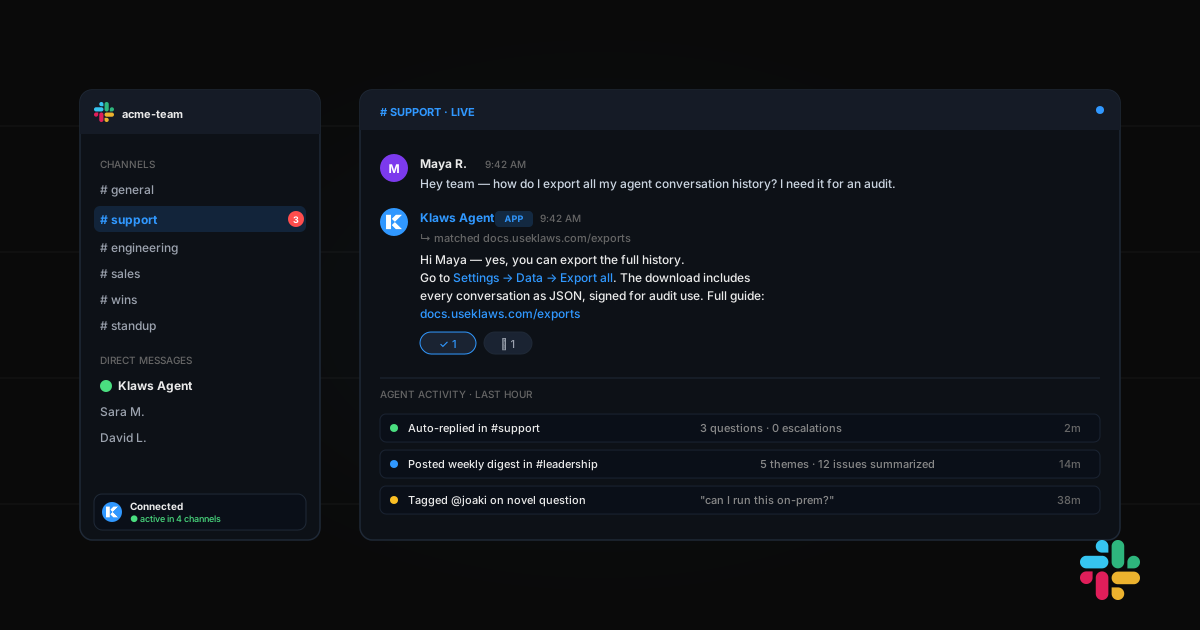
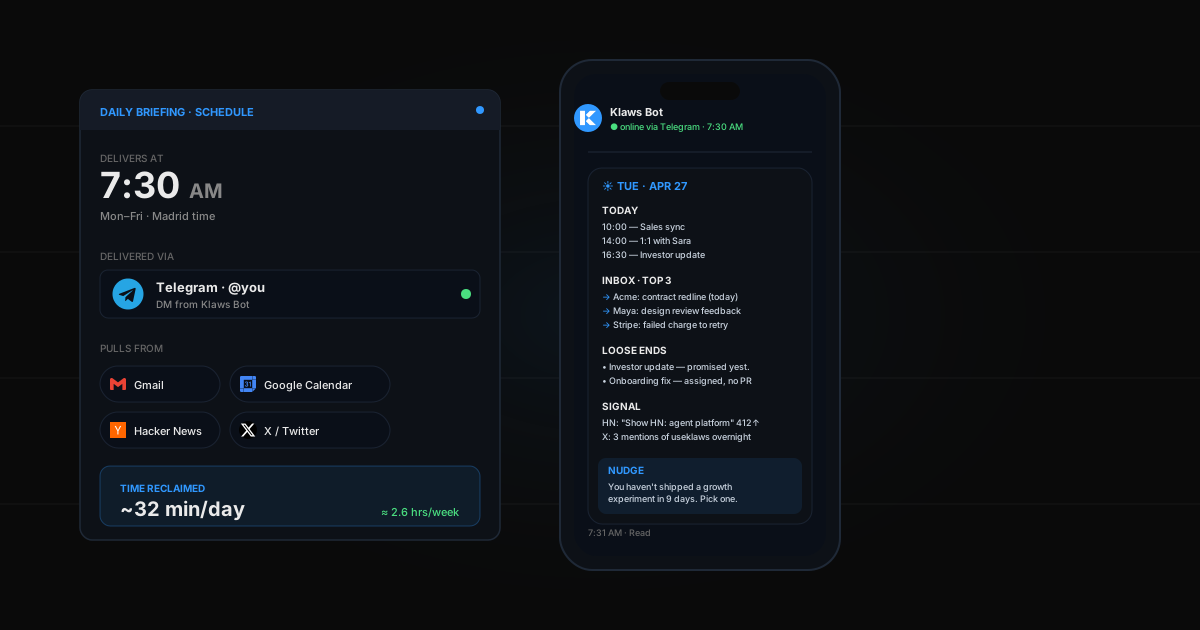
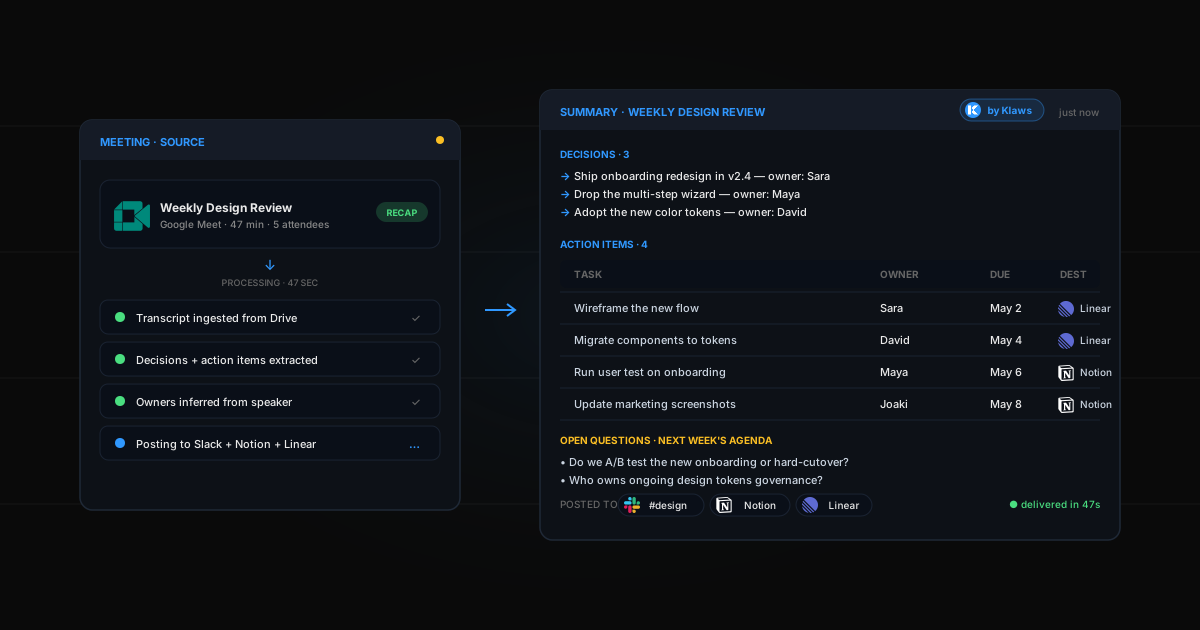
If you're using an AI agent to run social media, draft blog posts, or build landing pages, image gen has been the weakest link. You could get copy, research, and scheduling end-to-end — but every image still went through a human detour.
With gpt-image-2, an agent can now:
- Draft a social post with the image attached, text overlay spelled correctly, brand aspect ratio matched.
- Generate consistent character art across a multi-part content series without re-prompting.
- Produce landing page mockups with real copy that a developer can actually build from.
- Render diagrams and educational graphics where the labels have to be exact.
For a deeper take on where this fits, see our guide to AI content creation workflows that actually scale and how to automate social media with an AI agent.
Availability and access
- ChatGPT + Codex: rolling out to all users as of April 21, 2026. Instant mode for everyone; thinking mode gated to Plus, Pro, and Business.
- API:
gpt-image-2is live, priced by resolution and output quality. - Azure: available through Microsoft Foundry for enterprise.
What to watch next
Three open questions:
- Latency vs. quality curve. Thinking mode takes minutes. Does it drop under 30 seconds this quarter? If yes, it becomes a real interactive design tool. If not, it stays a batch tool for scheduled workflows.
- Tool use inside image gen. Web search during image generation is a sneak peek of agentic image workflows — "design me a landing page, pull the logo from their site, match their brand colors". That pattern is going to spread.
- The end of the "AI art" aesthetic. Once models follow a brief with this level of precision, the generic DALL·E look goes away. Output starts to reflect the brief, not the model's priors.
gpt-image-2 isn't a bigger image model. It's the first one that reasons. That's a category change, not a version bump. For the bigger picture on where every flagship stands in 2026, see our honest leaderboard breakdown.