If you've used Zapier for years and now want "an AI that does things", Zapier Agents is the obvious next stop. But it's built on top of a workflow engine that predates LLMs by a decade — and it shows. Klaws was built in the post-ChatGPT world, so the model is the interface. Here's how they actually compare.
Setup and the first task
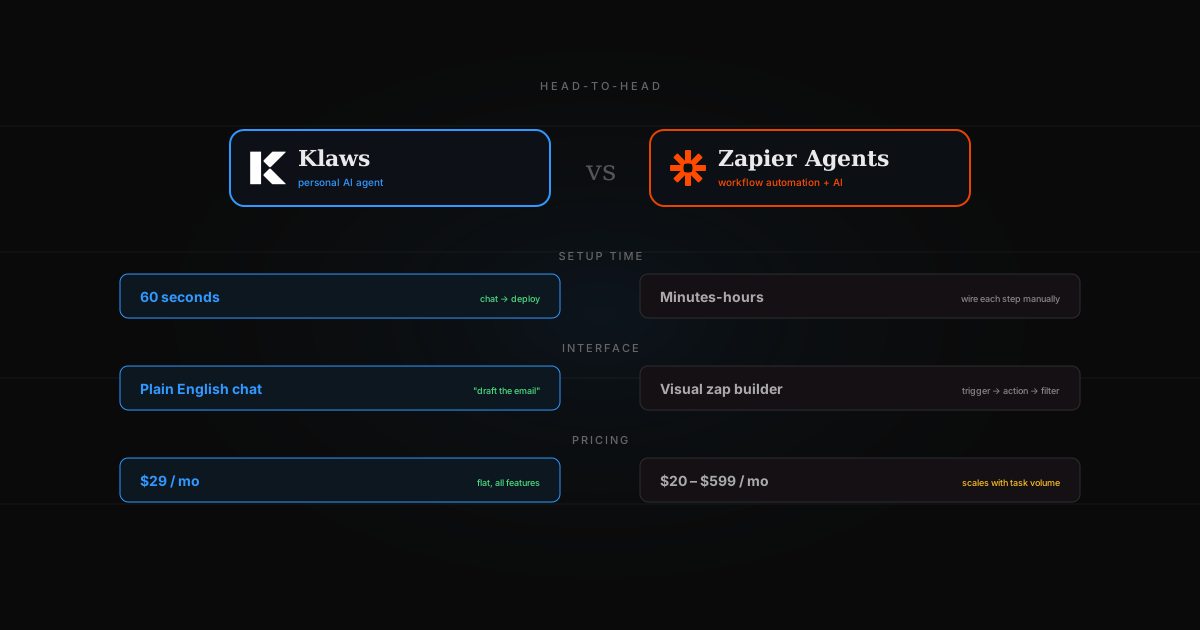
Klaws — You sign up, chat with your agent in plain English, and it deploys in 60 seconds. You say "every morning, email me a summary of what happened on Hacker News" and that's the entire configuration.
Zapier Agents — You start from a blank canvas, pick a trigger, pick the AI step, wire the inputs, pick an output action, test each step. It works, but you're still building a zap — just with an LLM block in the middle.
The first task on Klaws takes a minute. On Zapier Agents it takes 10–30 depending on how many steps you wire up.
What "agent" means on each platform
The word "agent" means different things here.
On Zapier, an agent is a workflow with an LLM step. The LLM sees one input, produces one output, hands back to the zap. It doesn't decide what to do — the zap decides, the LLM just fills in the gap.
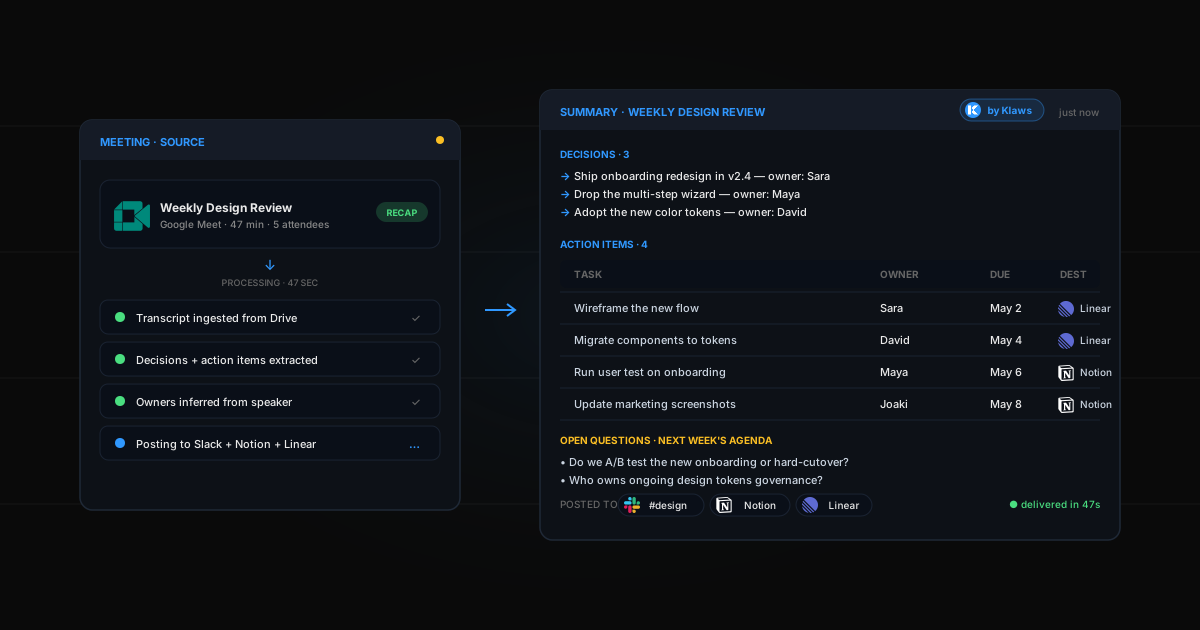
On Klaws, the agent is the top-level thing. It has its own memory, its own schedule, its own tools. You give it a goal and it decides the steps. If it needs to search the web, read a doc, call an API, and draft an email — all in one task — it figures out the order itself.
That difference shows up the moment a task has any branching. A Zapier zap fails when a step doesn't fit. A Klaws agent tries a different approach.
Integrations
This one actually favors Zapier: 7,000+ integrations vs Klaws' ~200 skills + native channels. If your workflow depends on a very specific vertical app (Kajabi, Xero, Podio), Zapier wins hard.
But most personal workflows use the same 15 things: Gmail, Calendar, Telegram, Discord, Notion, GitHub, X, Drive. Klaws has all of those natively and lets the agent discover new ones through its Skills Hub.
Pricing
| Klaws | Zapier Agents | |
|---|---|---|
| Entry | $0 (3-day trial) | $20/mo (Starter) |
| Starter | $19/mo flat | ~$73/mo (3k tasks) |
| Pro | $49/mo flat | ~$300/mo |
| Heavy use | $99/mo Ultra | $599/mo+ |
| Billing unit | Credits per month | Tasks per month |
Zapier meters tasks aggressively. Every action in every zap counts. With an AI agent that decides its own steps, that's a bill you can't predict. Klaws uses flat credits that reset monthly, and the Starter tier covers most personal use cases without an upgrade.
When to pick Zapier Agents
- You already have 50+ zaps running and want to add AI to existing flows
- You need a specific integration Klaws doesn't have yet
- Your company pays for Zapier and adding Agents is free
When to pick Klaws
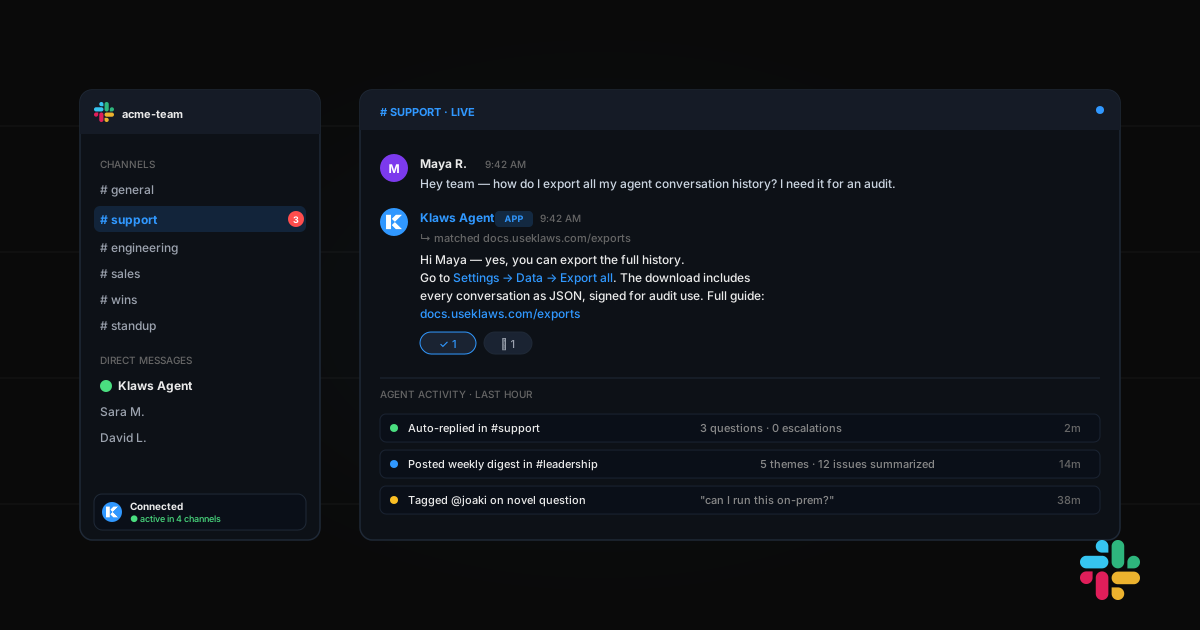
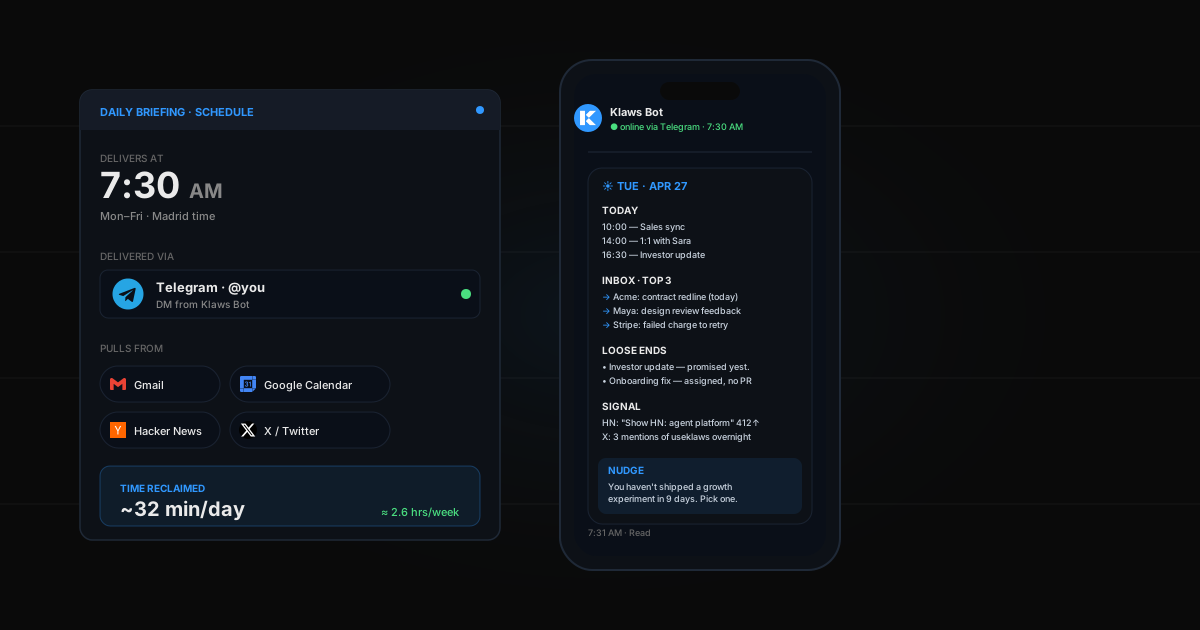
- You want one agent that runs 24/7 across chat, Telegram, and Discord
- You want to describe tasks in English, not wire steps
- You don't want to pay per-action pricing that scales with LLM calls
- You want Canvas (building websites, docs, presentations — Zapier has nothing like this)
The honest summary
Zapier Agents is the right answer if your mental model is "workflows, but smarter". Klaws is the right answer if your mental model is "an employee, but software". Both ship. The question is which metaphor matches how you actually think. For a broader look at the landscape, see our full platform comparison for 2026.