ChatGPT changed how people interact with AI. But as more tools emerge — agents, copilots, assistants — the lines are getting blurry. Let's cut through the noise.
ChatGPT: great at conversations
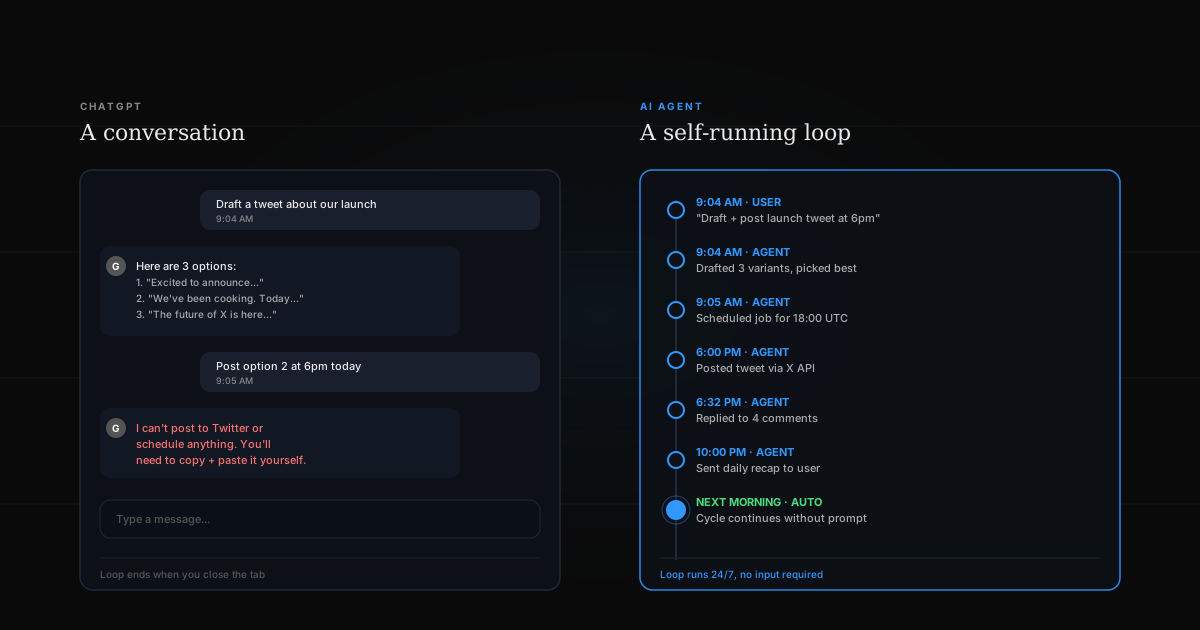
ChatGPT is a conversational AI. You ask it something, it responds. It's incredible for:
- Brainstorming ideas
- Writing drafts
- Explaining concepts
- Answering one-off questions
But it has limits. It can't browse the web in real-time (reliably). It can't send emails. It can't monitor things while you sleep. It can't run on a schedule. Every interaction starts from scratch unless you manually set up memory.
AI agents: great at doing things
An AI agent takes action. Instead of answering "how would I track my competitor's pricing?", it actually goes and tracks it. Every day. And emails you when something changes.
Key differences:
- Persistence — agents remember everything across sessions. Your preferences, your history, your goals.
- Autonomy — agents run without you. Set a task, walk away, get results.
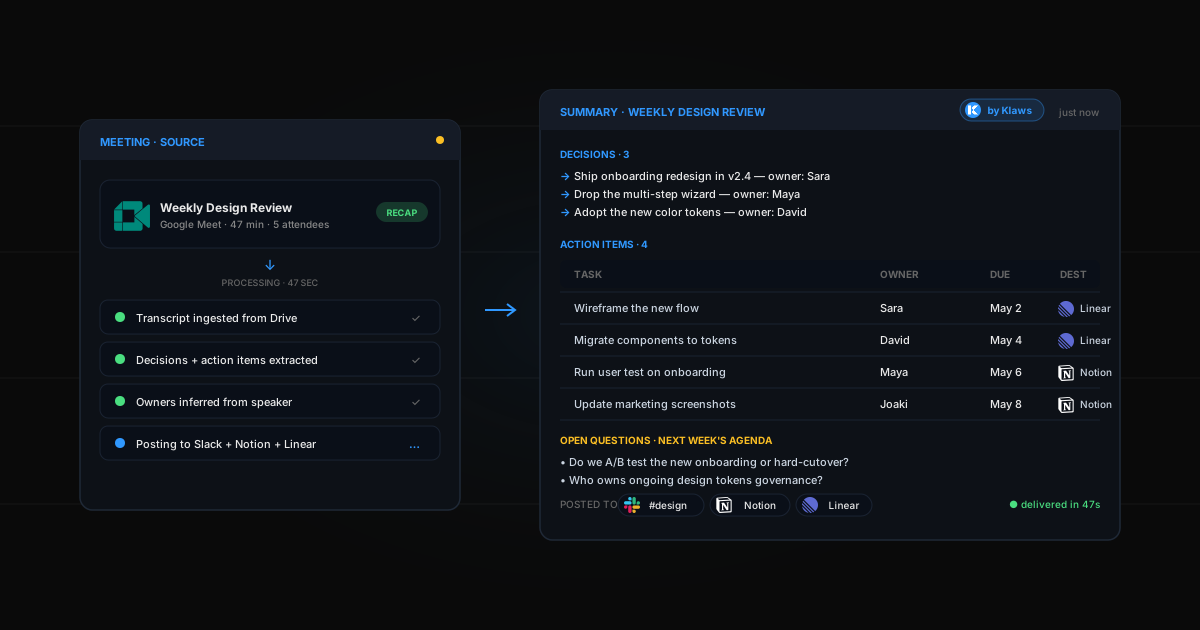
- Tools — agents connect to real services: email, social media, web scraping, APIs, databases.
- Scheduling — agents run on cron jobs. "Every Monday at 9am, compile a market report" is a one-line instruction.
When to use what
Use ChatGPT when:
- You need a quick answer or creative input
- The task is conversational and one-off
- You want to think through a problem interactively
Use an AI agent when:
- The task is repetitive and takes the same form every time
- You need it done without your involvement
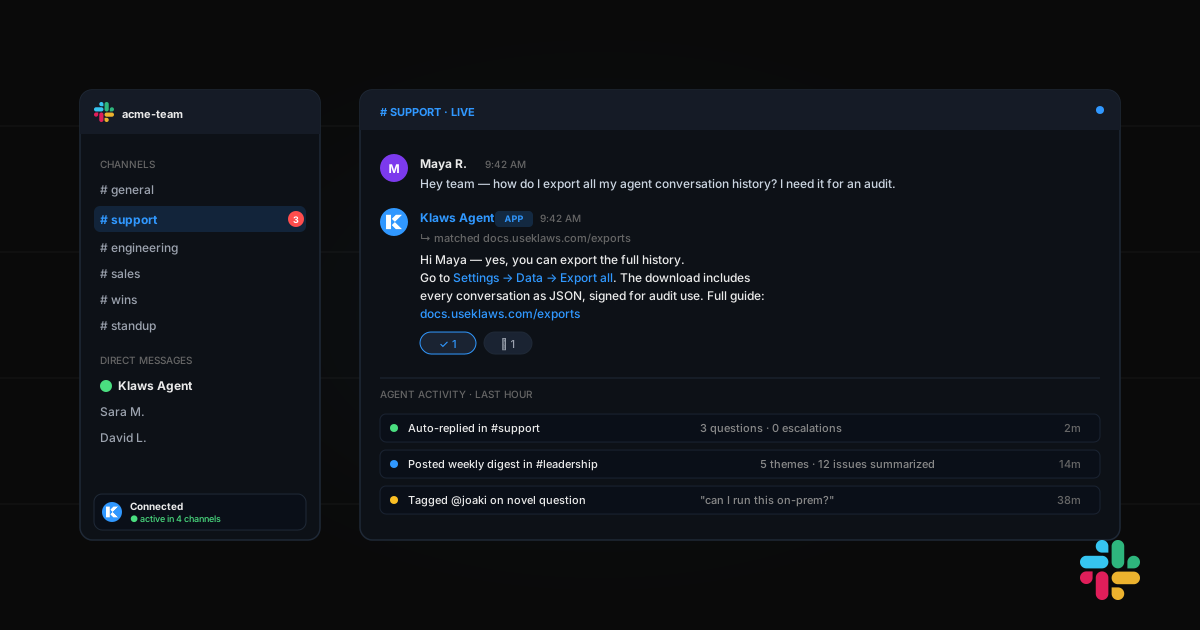
- It requires real-world actions (sending emails, posting to social media, monitoring websites)
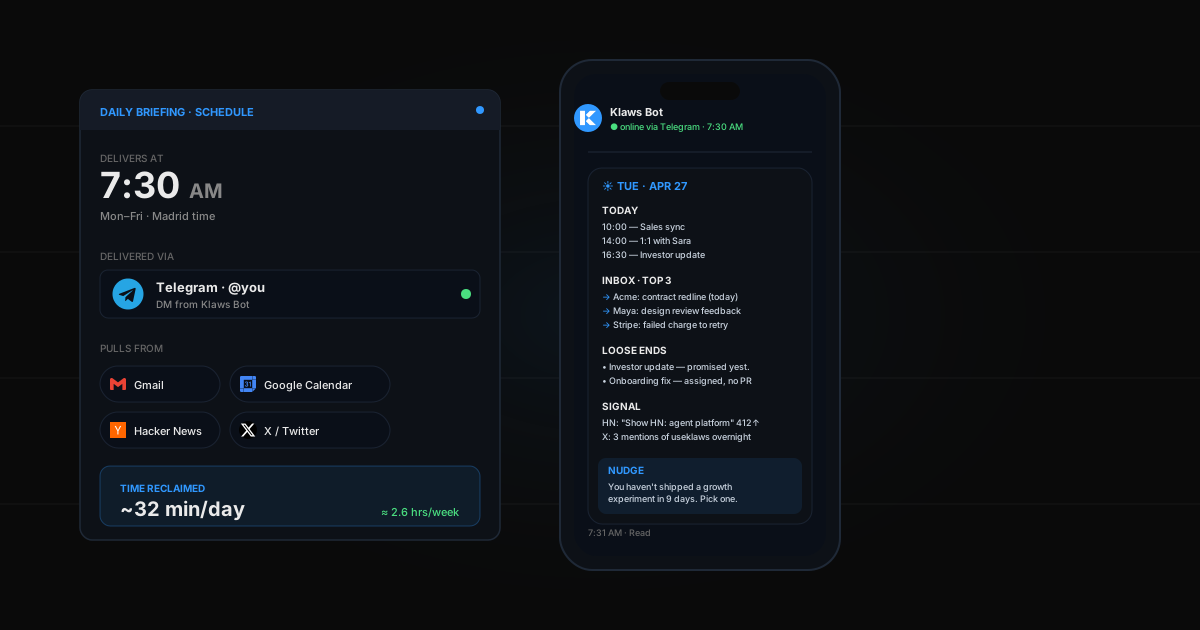
- You want results delivered on a schedule
They're complementary, not competing
The smartest users do both. They use ChatGPT for thinking and an agent for doing. One helps you plan the social media strategy. The other posts every day at 8am.
The question isn't "which is better?" — it's "which do I need right now?" If you're new to agents, our guide on what an AI agent actually is covers the fundamentals.